Is Helmet Padding Machine Washable? An Intake Guide for Cleaning Operators
Identify removable comfort padding, fixed interiors and impact liners before accepting a helmet. Check model-specific washing, drying and refitting guidance.
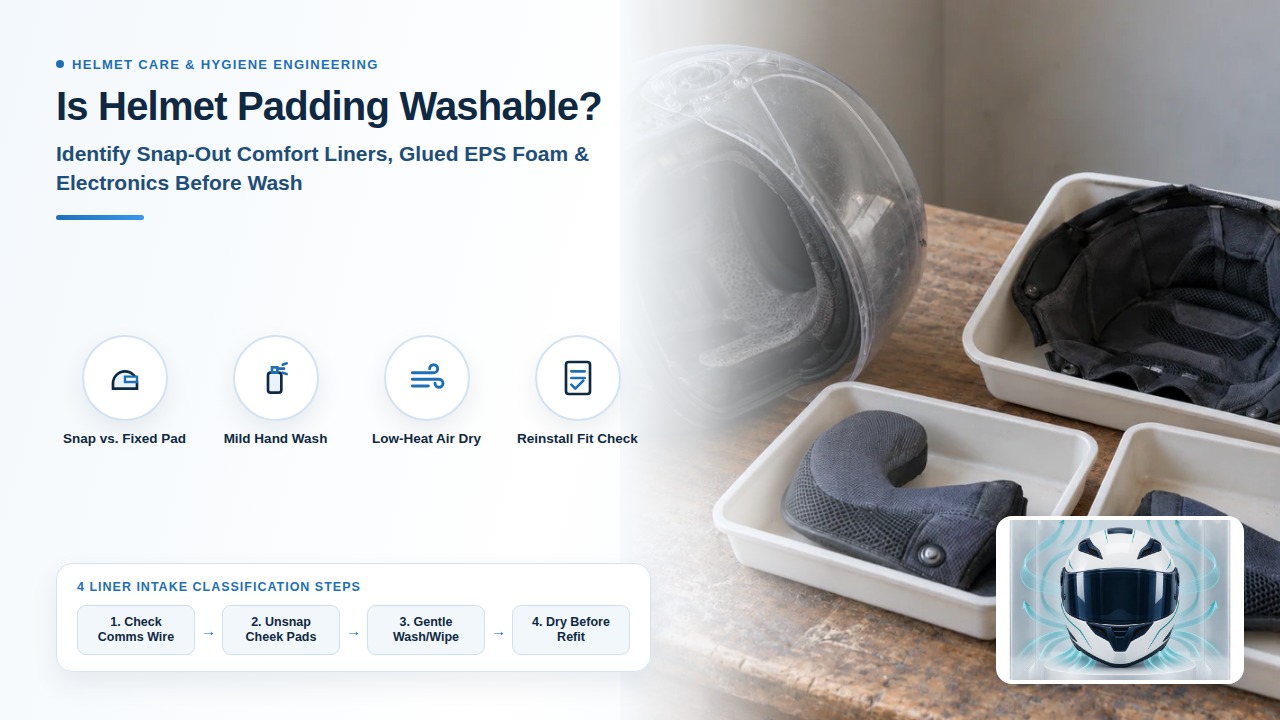
Treating every soft-looking interior as washable padding can put the wrong component into the wrong process. Helmet padding is machine washable only where the applicable manufacturer instructions permit that method for the identified removable comfort part.
At intake, separate removable fabric comfort padding, fixed interiors and the impact-absorbing liner. Record the permitted method for each accepted component. Permission to use a washing machine does not establish compatibility with a helmet cleaning cabinet, and cleaning does not restore an impact-damaged helmet’s protective performance.
Which part is being called padding?
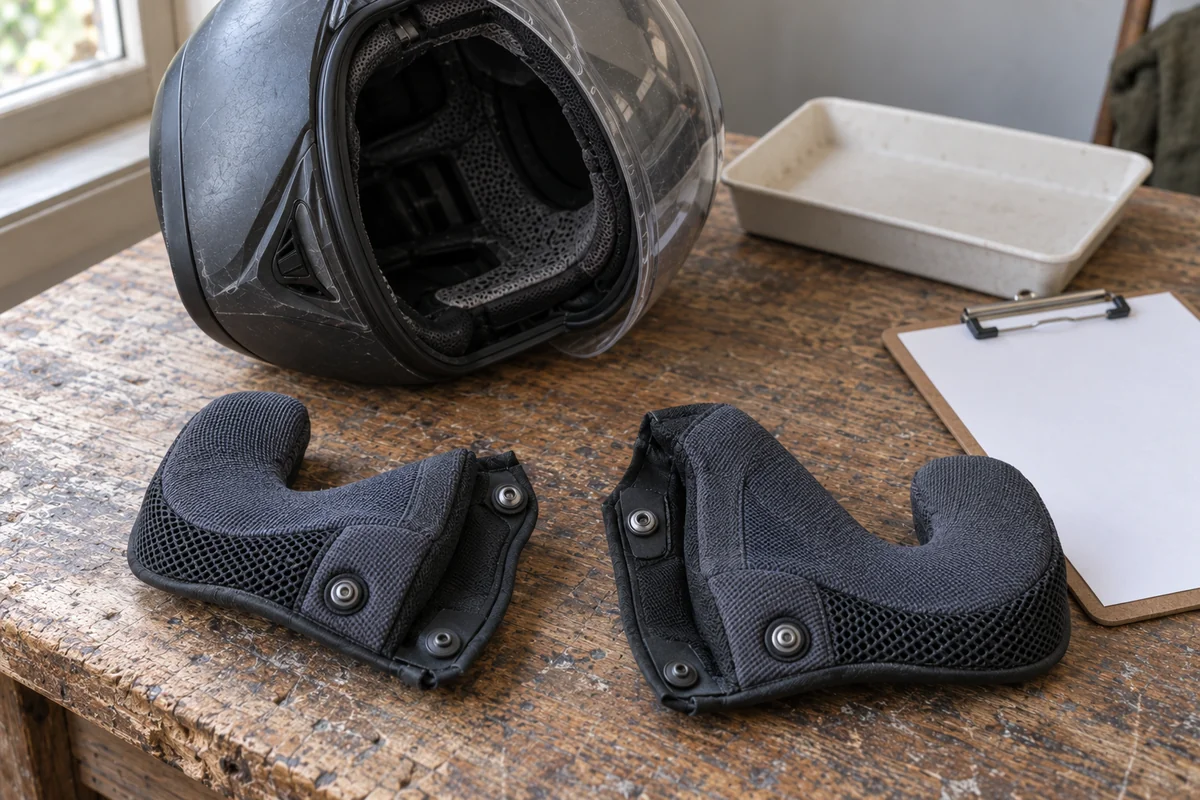
Identify the part before deciding whether to remove or wash it. “Padding” may mean the fabric touching the wearer, a fixed interior assembly or the liner beneath it. Those descriptions do not authorize the same treatment. Use the helmet model, component identification and care instructions to turn the customer’s request into a specific service decision.
| Input or item | Value or source to obtain | Why it matters |
|---|---|---|
| Helmet identity | Model identification and applicable instructions | Establishes the document to follow |
| Removable comfort part | Part description and permitted removal method | Separates washable items from attached structures |
| Fixed interior | Care section for the fixed assembly | Avoids applying detachable-pad instructions |
| Impact liner | Manufacturer identification and condition guidance | Keeps protective components out of a fabric-wash assumption |
| Proposed process | Part instructions and equipment-specific confirmation | Establishes whether this exact service is supported |
An impact liner is the part intended to absorb impact energy; EPS means expanded polystyrene where that material is specified. It is different from a fabric comfort liner even though both may be described informally as “the liner.” Identify the actual construction from the documentation rather than assuming all helmets use the same materials.
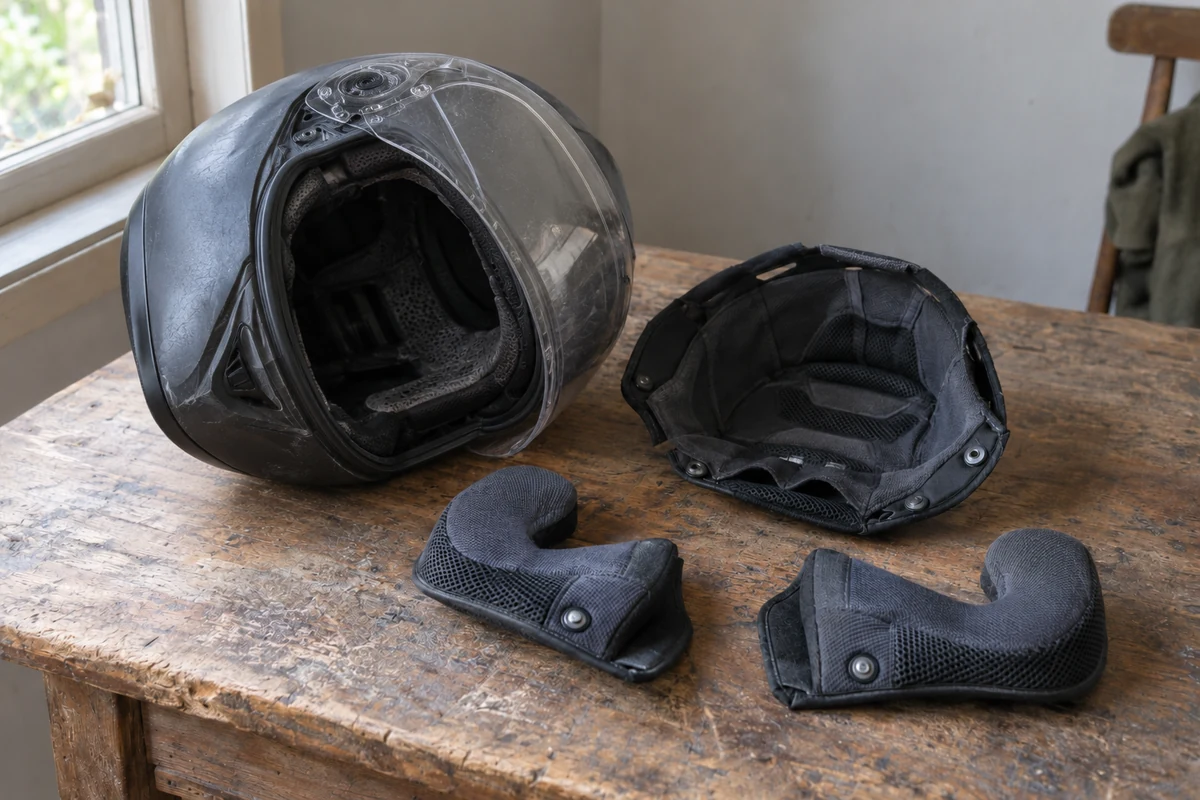
For the rest of the service route, use the intake and release SOP. This page adds the component decision before that procedure, rather than supplying a new whole-helmet cycle.
Takeaway: Give the requested component a documented identity before assigning a method.
What does the applicable care instruction allow?
Read the instructions for the identified interior and distinguish removal permission from washing permission. An instruction to detach a cheek pad does not by itself authorize a washing machine. Likewise, guidance for a removable interior does not apply to a fixed assembly. Record the method, exclusions and any specified handling conditions without adding a universal temperature or cycle.
One manufacturer’s public care guidance distinguishes removable interiors, fixed interiors and EPS liners. For its removable interiors, it describes hand or machine washing and a washing net when using a machine. Its fixed-interior and EPS sections describe different care, with cautions about heat, solvents and damage for the EPS liner. These are examples of why component categories matter, not instructions for every brand or model.
| Evidence found for the exact component | Suggested intake route | Record to keep |
|---|---|---|
| Removable and machine washing expressly allowed | Follow that component’s documented method | Instruction reference and applicable conditions |
| Removable but hand washing specified | Keep it on the documented hand-care route | Method and responsible operator |
| Fixed interior with a specified surface-care method | Keep the assembly intact and use that method | Fixed-interior care section |
| Method or component identity unresolved | Hold the requested process for clarification | Missing document or identification question |
| Condition requires manufacturer attention | Refer rather than treating cleaning as repair | Observed condition and referral action |
The equipment selection guide helps separate configuration claims from demonstration evidence. For a self-service cabinet, ask about the exact helmet range and process; a fabric washing instruction is not evidence for heat, spray, drying or other stages inside that cabinet.
Common mistake: Writing “machine washable” on a whole-helmet intake record because one detachable pad is washable. Put the permission beside the named component and method instead.
Takeaway: Accept only the documented component-method combination.
How do you keep removed parts with the right helmet?
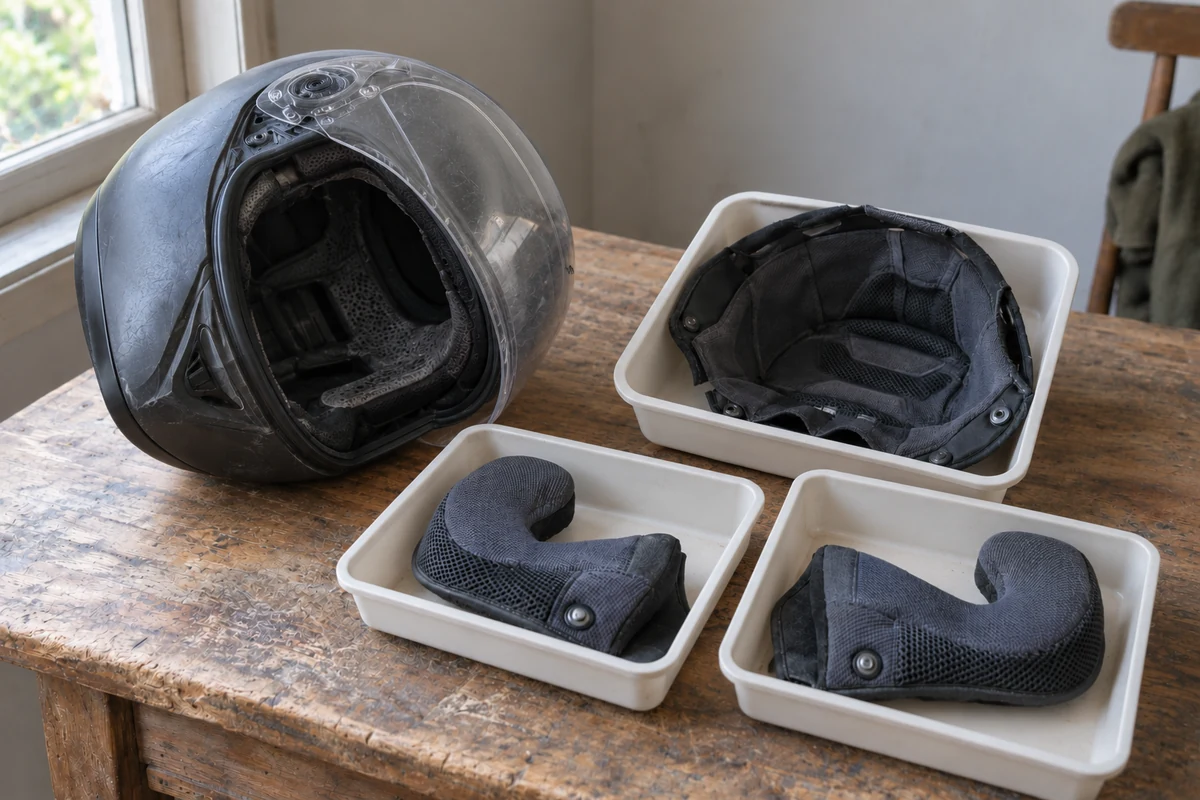
Use a component record and a separate tray or container to preserve identity during removal, cleaning and refitting. Follow the documented detachment sequence, without pulling on a part whose fastening method is unclear. A matched set of clean-looking pads is not a substitute for knowing which parts belong to the received helmet.
Before removal, record the helmet identifier, part description and attachment position. Photographs can help show the original arrangement. Keep any removable items together with that record and protect identifiers from being lost during the process. Avoid adding marks, adhesives or tags directly to protective components unless the helmet instructions permit the method.
| Record field | Entry to make | If it is unresolved |
|---|---|---|
| Helmet and component | Identifier; part name; position | Hold identification before removal |
| Detachment | Documented sequence and original attachment | Stop if removal differs from the instructions |
| Incoming condition | Visible wear, cuts, loose parts or reported history | Refer the issue to the responsible reviewer |
| Work location | Container or tray associated with this helmet | Resolve a mix-up before continuing |
| Method | Instruction reference and chosen permitted route | Keep the component out of processing |
The equipment function comparison explains where staff handling remains part of the service. Allow time for component identification and custody when using the throughput planning guide; do not assume that every received helmet follows the same preparation path.
Takeaway: Preserve the link between helmet, component, instructions and work record.
What should be checked before reassembly?
Complete the drying and attachment checks specified for the component before refitting it. Do not use a fixed drying time taken from another helmet, or choose a drying method that the applicable instructions do not permit. Record the observed condition and the assembly result as separate checks.
The intake record should carry forward any specified drying method and refitting sequence. Where the instructions do not resolve a drying or attachment question, hold that decision for clarification. A machine completion display only describes the selected equipment event; it does not answer every component’s drying or refitting requirement.
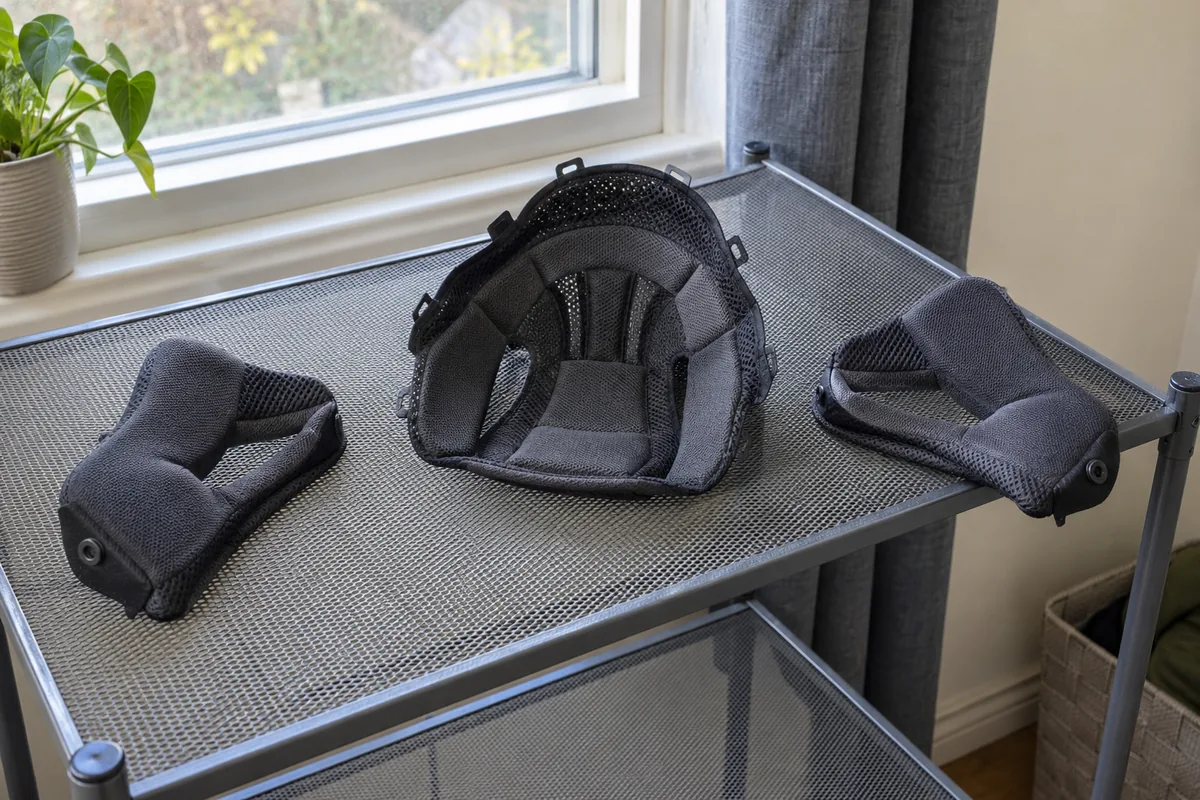
Check that the same component set is being refitted, the documented attachment points can be secured and no new visible problem needs escalation. Record an unresolved fit or fastening issue rather than forcing the part into position. Where replacement is required, use the helmet manufacturer’s route for the correct part; this guide does not select replacement pads or certify helmet fit.
Before recording refitting as complete:
- Match the original part set and custody identifier to the helmet.
- Locate the drying requirements for that part; leave an unanswered requirement on hold.
- Record the drying observation without inventing a duration or temperature.
- Follow the specified attachment sequence and record any unresolved fastening concern.
- Assign the outstanding issue to the person responsible for clarification or referral.
Keep the cleaning and disinfection distinction visible in staff training. A completed wash or apparently dry fabric does not establish a microbial reduction or a protective-performance result.
Takeaway: Drying, attachment and condition each need their own recorded outcome.
When should intake stop?
Hold service when the helmet or component cannot be identified, the proposed method has no applicable permission, or a reported or visible condition requires manufacturer attention. These are suggested routing rules for the operator. They help staff avoid treating a cleaning request as permission to repair or release a questionable helmet.
The cited care guidance warns against using a helmet whose EPS liner has moved because of deteriorated adhesive. It also directs damaged or troubled items to the manufacturer’s service route. Apply the relevant instructions to the received helmet; do not turn that example into a universal repair technique or try to reattach a protective liner as part of routine cleaning.
| Intake finding | Suggested action | Handover note |
|---|---|---|
| Unknown model or component | Hold identification | What information is missing |
| No applicable care method | Ask for the component instructions | Requested document or clarification |
| Reported impact or visible structural concern | Refer for the applicable manufacturer decision | Customer report and visible observations |
| Torn or deteriorated comfort component | Check the replacement instructions | Part identity and condition |
| Loose impact liner or unclear attachment | Stop ordinary cleaning acceptance | Observed movement and referral |
| Parts mixed between helmets | Resolve custody before processing or refitting | Identification discrepancy |
Use the maintenance checklist when the concern belongs to the machine. Keep machine fault handling separate from a helmet-component rejection so staff escalate to the correct party. When the question is whether an older helmet has passed its manufacturer’s recommended replacement window, use the five-year rule date-source register to record manufacture, purchase, first-use and warranty dates before accepting component care.
Common mistake: Treating a better smell or cleaner surface as evidence that an impact-related concern has been resolved. Record and refer the concern separately from the cleaning result.
Takeaway: Give each held component a reason and a named next action.
When this guide does not apply
This is a component-intake guide for cleaning operators, not a helmet repair manual, a universal laundry prescription or an equipment compatibility certificate. It provides no temperature, detergent concentration, drying duration or treatment dose. Motorcycle, bicycle and other helmet designs need their own applicable documentation.
Use these scope checks before adding a part to the accepted list:
- Is this the exact removable comfort component covered by the washing instruction?
- Is a fixed interior or impact liner being mistaken for that component?
- Does an accessory require separate instructions?
- Is cabinet treatment supported separately from any washing-machine permission?
The removable-interior example is limited to the source manufacturer’s stated scope. Fixed padding, electronics, impact liners and accessories cannot be included by analogy. Neither this checklist nor permission for domestic laundering establishes that a complete helmet can be processed in the proposed cabinet.
For the broader service format, the business planning guide addresses operator responsibilities and site work. Keep the component decision attached to that plan instead of advertising a single process for every helmet received.
Takeaway: Expand an accepted list through specific evidence, not similarity of appearance.
Record the part-level decision
End intake with an accepted method, a hold for missing information, or a referral, each tied to the component identity. Before handover, add the drying and refitting observations, operator and any outstanding issue. The record supports a traceable cleaning decision; it is not a certification of the helmet’s protective performance.
Use a separate record for each component being considered. These are suggested operator fields, with no prefilled settings or acceptance result.
| Part-decision field | Entry to complete |
|---|---|
| Identity and category | Helmet model; part identity; removable comfort / fixed interior / impact liner |
| Instructions | Applicable document and section; permitted method and restrictions |
| Removal and custody | Original position or photograph; permitted detachment; tray or container identifier |
| Proposed cabinet route, if any | Configuration and program; separate compatibility-confirmation basis |
| Drying and refitting | Documented conditions; observations; attachment result or unresolved question |
| Final routing | Accepted method, held or referred; reason and outstanding issue |
| Handover | Operator; responsible reviewer; next action and component set handed over |
Route an equipment-program question to the equipment provider and a helmet repair or replacement question to the helmet manufacturer’s service channel. Preserve the part photographs and applicable care document with that question, rather than asking for a decision about unidentified “padding.”
Takeaway: Hand over the component decision and its unresolved conditions with the helmet.
Method and sources
The part categories and limited care examples come from one manufacturer’s public care instructions that distinguish removable interiors, fixed interiors and EPS liners. Use the current instructions supplied for your own helmet and component as the operating reference. The intake tables are suggested records, not a washing standard. HCE’s self-service guide and SOP guide provide the equipment and workflow context; they do not establish permission for domestic laundering or cabinet processing of a particular part.
Frequently Asked Questions
Is helmet padding machine washable?
How to clean a helmet at home?
What is the best cleaner for helmets?
Is there a bike helmet washing machine available?
Can I clean my helmet with sanitizer?
Can I make my own helmet cleaner?
Discuss your requirements
Contact us about the equipment question in this guide.
We reply within 24 hours.
What to send us
| Item | Why we need it | Example format |
|---|---|---|
| Application | Understand the intended use | Site type; operating arrangement |
| Question to resolve | Focus the configuration discussion | Question; relevant guide section |
| Configuration and quantity | Identify the proposed equipment scope | Model; number of units |
We reply within 24 hours.
Related articles
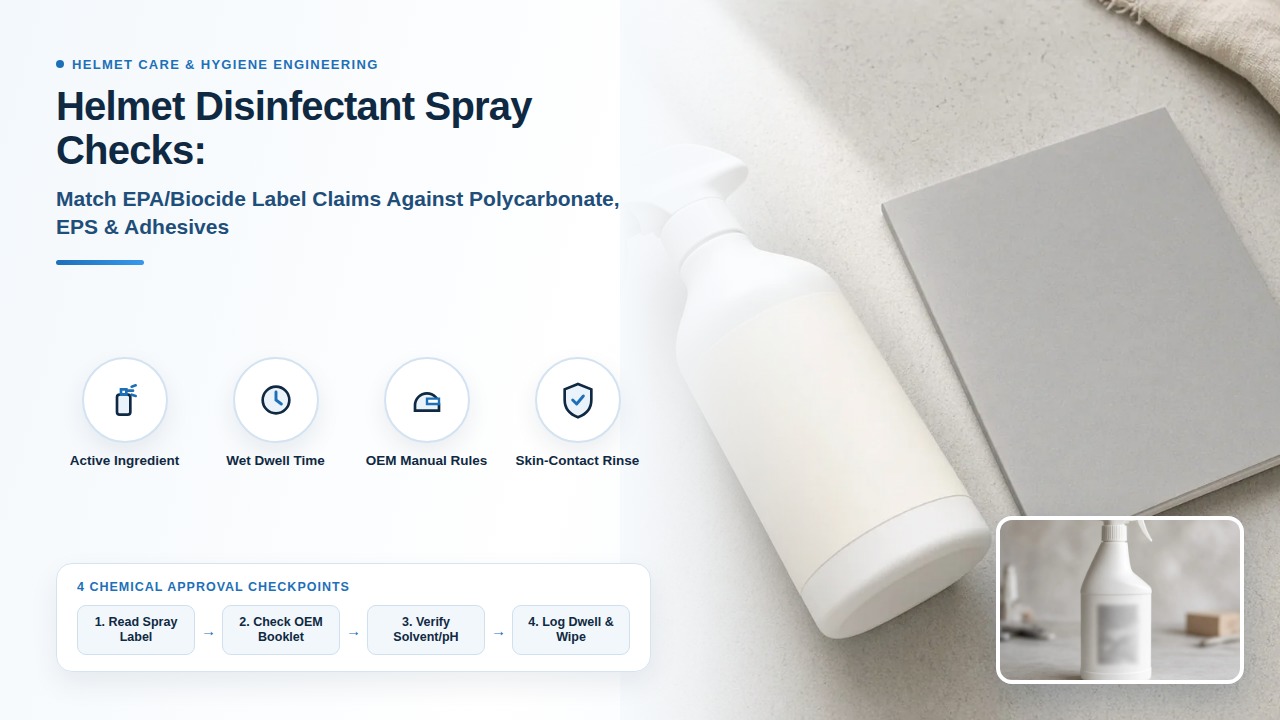
Helmet Disinfectant Spray: Check the Label and the Helmet Document
Hold a disinfectant spray until its container label and the exact helmet or component document both allow it on that surface for that use. Record the decision.
Read article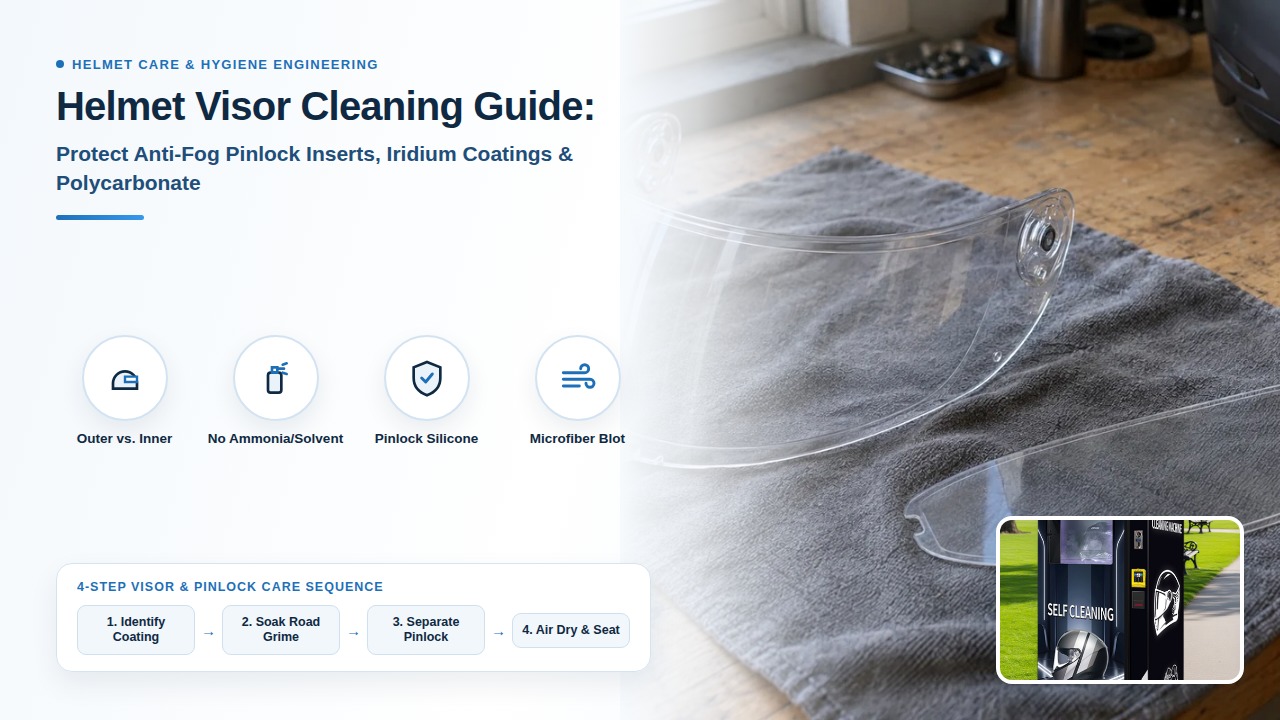
Helmet Visor Cleaning: Chemical and Insert Checks
Check the visor, coating and anti-fog insert separately before choosing a cleaner, and record what each instruction permits.
Read article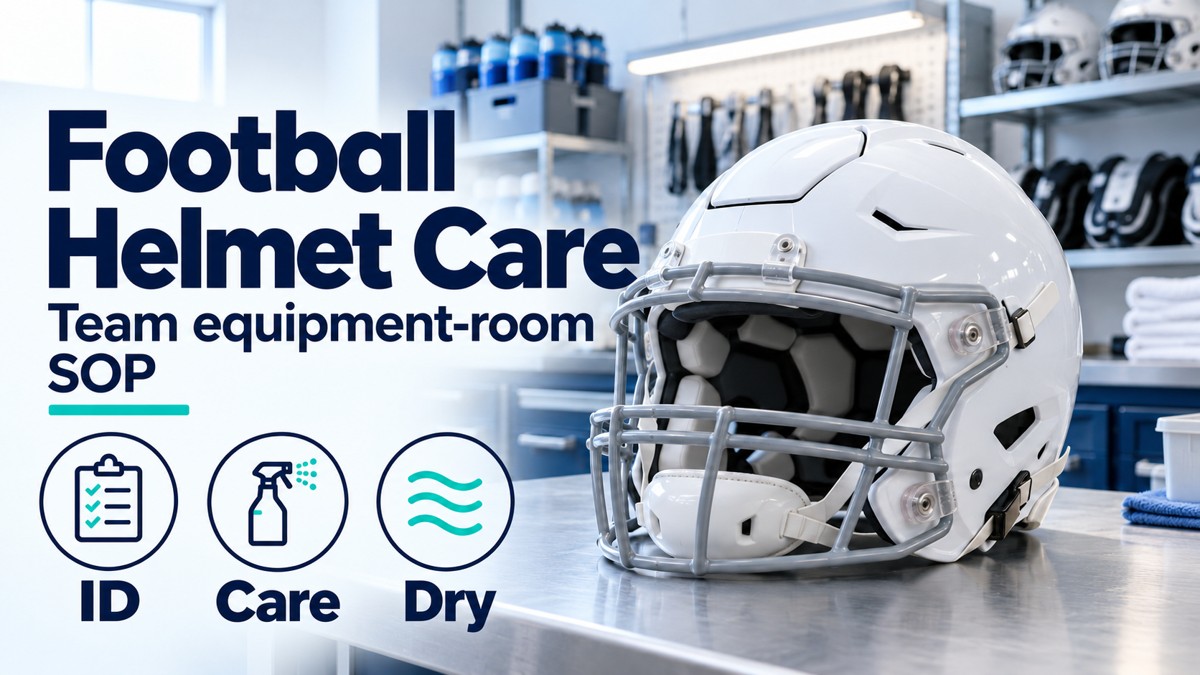
How to Clean a Football Helmet: Team Equipment-Room SOP
Run a football helmet cleaning and sanitizing SOP with component checks, disinfectant label decisions, batch planning and a downloadable team care log.
Read article