Multilingual interface
Screen and voice languages can be configured for the order.
Self-Service Configuration
The HCE K2 is a configurable helmet cleaning vending machine for operators planning self-service sites. Compare the electrical requirements, payment integration and maintenance needs before requesting a factory quote.
Prepare a Self-Service InquiryWe reply within 24 hours.
Rated power: 1800 W; Maximum power: 2650 W
Payment, monitoring, locks, cycle, environmental protection, and service autonomy depend on the approved configuration. Confirm them in the technical sheet and validate local integration before installation.
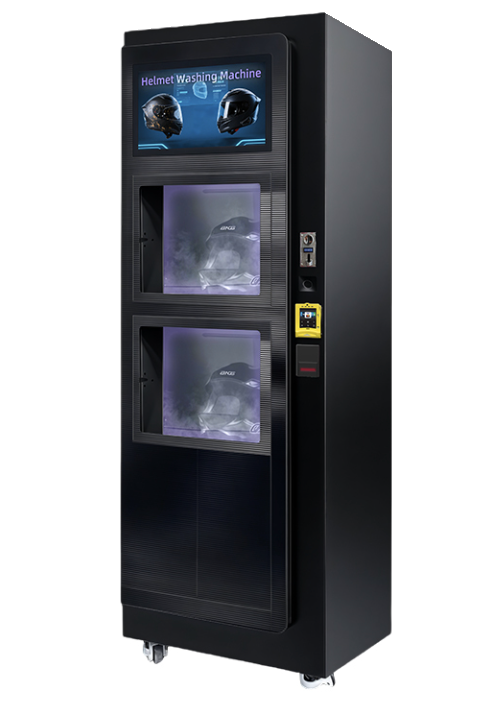
Use the confirmed power ratings below to start your site assessment. Agree the remaining configuration in the technical sheet before ordering.
Check voltage, frequency, circuit capacity and installation requirements for your destination. Maximum power is not the energy used per cycle.
A vending installation combines equipment, payment, a suitable location and a service routine. The K2 configuration is the starting point; the following operating decisions determine what your quotation and site plan need to cover.
Choose the operating format around how customers arrive and who can help them. In a workshop, staff can inspect the helmet, explain the service and collect payment at the counter. At a self-service point, those steps need clear instructions and a support route that remains available during opening hours.
| Decision | Staffed service | Self-service point |
|---|---|---|
| Intake | Staff check the accepted helmet and accessory list. | Display accepted items and exclusions before payment; define how exceptions are handled. |
| Payment | Counter payment can be separate from machine operation. | Validate payment confirmation, cycle start and failed-transaction handling together. |
| Customer assistance | An operator is present for loading and collection. | Provide understandable instructions and a visible contact for problems. |
| Maintenance | Include cleaning and replenishment in the staff shift. | Assign inspection visits and a person who can reach the site. |
Measure access doors, delivery routes, floor space, door opening clearance and the room needed for maintenance. Check whether a waiting customer blocks a walkway or access to another service. Use the packing and cabinet dimensions for the quoted model, not the dimensions of a different cabinet pictured elsewhere on the site.
K2 rated power is 1800 W and maximum power is 2650 W. Have the site electrician check the selected voltage, frequency, supply circuit and protection against the order-specific requirements. These power ratings do not establish the electricity consumed by one cleaning cycle.
Confirm shelter, ventilation, ambient conditions, network coverage and any water or waste-handling requirements in the technical sheet. A sheltered location still needs assessment; a photograph of an installation does not establish the enclosure rating of your configuration.
Ask for a demonstration using the intended payment provider and machine configuration. A QR sticker, card-reader bracket or successful test payment alone does not show that payment and equipment control work together. Decide who can authorize a refund and what the customer should do if the service does not start.
Build the visit schedule from measured use. Record completed cycles, consumable additions, cleaning tasks, faults, service time and unavailable hours. Tank size alone does not determine how many days a machine can run between visits, and remote monitoring does not replace physical inspection.
During a trial, distinguish passers-by from paying customers and completed services. Observe both busy and quiet periods, waiting time, repeat visits and failed transactions. Use those measurements in the cost model before assuming that a second site will perform like the first.
Screen and voice languages can be configured for the order.
QR, card, or another method depends on provider and market compatibility.
A connected dashboard may be available; features, hosting, and fees require confirmation.
A module is available as an option; parameters and safety controls must be documented.
Sheltered fuel stations
Motorcycle parking facilities
Courier support hubs
Mobility terminals
These are application scenarios, not deployment cases or demand promises. Complete electrical, environmental, safety, and traffic reviews.
Editable examples, not equipment quotes. Replace every input with your own quote, site measurements and operating costs.
Choose revenue share or fixed rent to avoid counting the same site cost twice. The result is operating surplus before tax, financing and depreciation. Add other relevant costs above. Zero defaults are assumptions to replace.
Complete all inputs with valid numbers to see the estimate.
Illustrative simulation only. Actual operating results vary based on deployment location, foot traffic, local pricing, electricity rates, and equipment management.
These scenarios use your current cost assumptions and downtime. Volumes are examples, not measured customer demand.
| Helmets/day | Monthly operating surplus | Simple payback |
|---|---|---|
| 5 | $332.25 | 8.4 months |
| 10 | $699.50 | 4 months |
| 15 | $1,066.75 | 2.6 months |
| 25 | $1,801.25 | 1.6 months |
| 40 | $2,903.00 | 1 month |
Contact us about a helmet cleaning equipment configuration (HCE-K2).
We reply within 24 hours.
Share country, site, payment method, and operating requirements directly with the factory on WhatsApp.
We reply within 24 hours.
WhatsApp opens in a new window. You can share your model, quantity, destination, and technical requirements directly with the factory.
Questions about self-service configuration and operation.
Identify the helmet parts, required manual work and drying conditions before setting a collection time. Our manual and automated motorcycle helmet cleaning comparison explains the component-care route and provides a worksheet for recording the full service time and monthly operating inputs.
Service-scope guidance updated October 19, 2026.
| Item | Why we need it | Example format |
|---|---|---|
| Market and site | Identify the intended installation | Country; site type |
| Power and payment | Discuss electrical and payment compatibility | Voltage; frequency; provider |
| Helmet range | Check the intended use | Helmet models; sizes; materials |
| Operating arrangement | Identify responsibilities | Staffed / unattended; responsible operator |
We reply within 24 hours.