How to Clean a Motorcycle Helmet: Manual vs Automated Process
Follow a motorcycle helmet's care instructions, separate washable pads from fixed parts, and compare manual cleaning with a documented automated process.
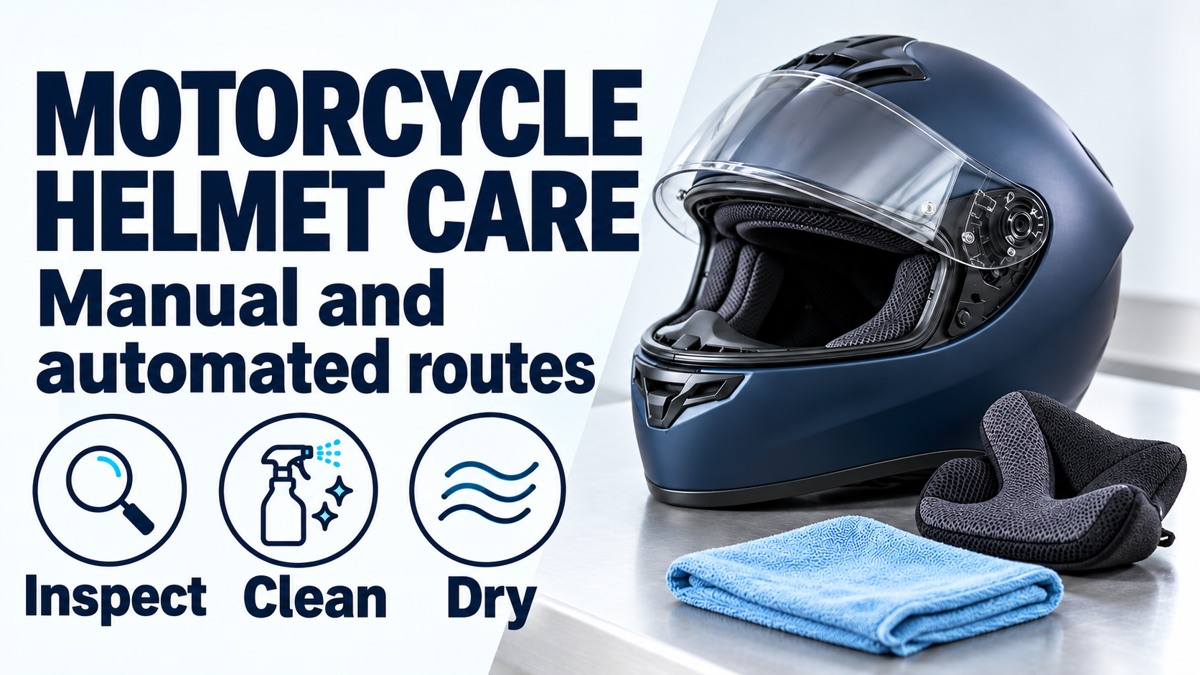
A short machine timer can leave a rider waiting if the motorcycle helmet still needs separate cleaning or drying. To clean a motorcycle helmet, follow its manufacturer’s instructions for the shell, visor and interior, wash only the comfort parts approved for removal, and complete the prescribed drying and refitting checks.
The manual and automated processes must cover the same work before you compare them. Manual cleaning gives access to removable comfort pads and visible deposits; an automated helmet cleaning machine needs documented permission for the helmet and accessories it will treat. A deodorizing cycle does not, by its name, establish soil removal, complete drying or a disinfection result. Start with the manual route below, then use the comparison to decide what a commercial cabinet would actually replace.
| Input or item | Value or source | Why it matters |
|---|---|---|
| Helmet and attached parts | Model-specific care and fitting instructions | Defines what can be removed and treated |
| Washable comfort interior | Instructions for the identified pad or liner | Separates fabric washing from the impact liner |
| Cabinet process | Order-specific process and compatibility documents | Establishes which manual tasks remain |
| Collection time | Observed complete service time | Includes intake, waiting, drying and refitting |
How do you clean a motorcycle helmet manually?
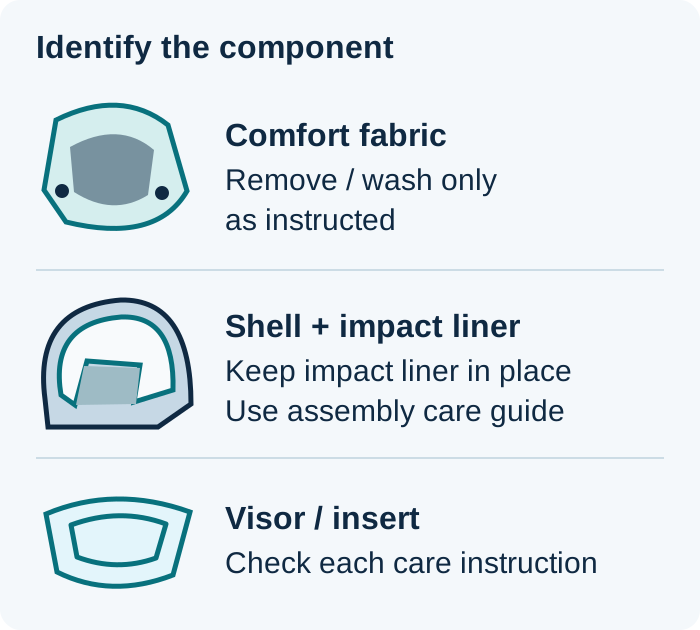
Clean each component using its own care instructions, then dry and refit it before use. The sequence below organizes that work; the helmet manual supplies the permitted materials and handling details. A removable fabric comfort liner and the impact-absorbing liner are different components.
- Identify the helmet model and inspect its incoming condition. Read the applicable care and assembly instructions before removing anything. Record damage or unknown chemical exposure separately from the cleaning request; direct protective-condition concerns to the helmet manufacturer.
- Remove only the components that the instructions identify as removable for care. Keep left and right comfort pads, fasteners and optical parts associated with the same helmet. Follow accessory instructions for any communication unit or electronics; do not assume the device can remain during washing or cabinet treatment.
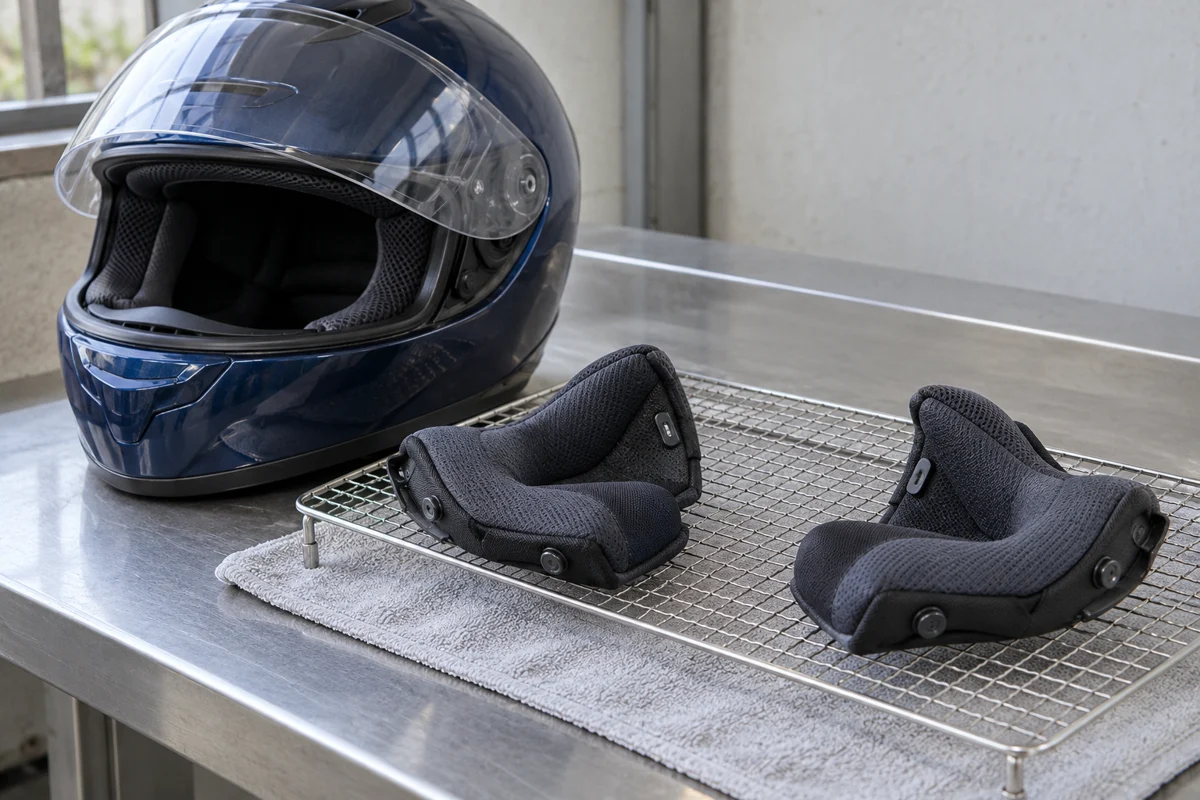
- Clean removable comfort pads by the permitted method. For example, SHOEI’s public maintenance guidance allows hand or machine washing of removable interiors and specifies a washing net for machine washing. That permission does not cover the EPS impact liner or approve a commercial treatment cabinet. Use the padding intake guide if the part’s identity is unclear.
- Clean the shell, fixed interior and vents under their respective instructions. Keep the impact liner in place. SHOEI distinguishes wiping fixed interiors from washing detachable fabric and warns that EPS is vulnerable to solvents and heat. HJC’s flat-finish guidance uses mild soap and warm water and excludes rubbing compounds; do not transfer a glossy-finish polishing method to a matte shell.
- Give the visor and any insert their own care route. Arai’s shield guidance uses warm water and a microfiber cloth, with a wet cloth laid over bug deposits to soften them. Use the actual coating and insert instructions before applying detergent or a spray. The visor and chemical checks explain this component split.
- Complete drying, refitting and final checks. Follow the applicable drying method and reinstall the same parts using the assembly instructions. Check attachments and the final visible condition before returning the helmet. Do not treat a clean appearance as a repair of impact damage or a fit problem.
Gather clean cloths and the materials specified by the manual before starting. A general household cleaner or an existing shop spray is not a substitute for those instructions. Stop when a part cannot be identified or its removal method is unclear, rather than pulling on a fixed assembly to make the job resemble another helmet’s wash procedure.
Drying is a completion condition, not a universal number of hours. SHOEI’s safety instructions direct wet interiors to a dry cloth or a shaded, well-ventilated place. HJC specifies air drying for its removable pads. Use the requirements for the actual helmet; do not shorten the process with an improvised heater or assume that a dry outer fabric means every relevant part is ready to refit.
What can an automated process replace?
A cabinet can replace only the tasks covered by its documented process for an accepted helmet. Compare the intended service outcome, access to the parts and release conditions together. A short deodorizing service and a pad wash are different service scopes unless the proposed process demonstrates the same required result.
| Route | Suitable starting point | Work to confirm or retain | Dominant Failure Mode & Prevention |
|---|---|---|---|
| Manual component cleaning | Identified helmet with permitted care methods and staff available | Part handling, soil removal, drying and reassembly | Wrong part or cleaner used; separate components and follow their own instructions |
| Automated cabinet treatment | Helmet and accessories accepted for the documented configuration | Soil-removal scope, any preparation, drying endpoint and collection procedure | Timer completion mistaken for service completion; validate the entire release sequence |
| Manual preparation plus cabinet | Required manual work followed by a separately compatible machine process | Both methods and their combined handling requirements | Extra work omitted from the advertised time or cost; record both stages as one service |
For a rider, visible dirt requiring the documented wash route is a reason to choose that route before paying for a different treatment outcome. For a shop, automation is a procurement decision after the accepted helmet list, retained manual work and handover procedure are clear. The self-service equipment guide covers site, payment and operating responsibilities for that decision.
What must be checked before cabinet treatment?
Obtain a process description and compatibility basis for the actual configuration before accepting a helmet. “UV,” “ozone,” “low temperature” and “dry cleaning” do not specify a complete process or establish permission for every shell, adhesive, foam, coating and accessory.
Ask which stages remove deposits, which apply a treatment, and which remove moisture. Request the cleaning medium and consumable identity, relevant process settings, loading arrangement, exclusions and documented release conditions. Keep any efficacy report tied to its tested configuration, load, organism and method. The cleaning and disinfection guide separates the outcomes that a service description may claim.
Where a proposed configuration uses ozone, obtain its containment, exposure-control and release documentation. EPA’s public ozone air-cleaner guidance addresses exposure and material concerns in its own indoor-air context; it does not validate an enclosed helmet cabinet or provide that cabinet’s operating settings. A UV module name also does not establish a treatment result for the helmet interior. Ask for evidence covering the actual loading and claimed outcome.
Decision rule: If the customer’s available collection time is shorter than the observed complete service time for that helmet and process, offer a later collection slot or decline the timed service. A shorter programmed cycle cannot remove the remaining preparation, drying or release work. For material settings, use the helmet and equipment documents together; do not invent a universal temperature or exposure threshold.
Run a representative acceptance trial before planning unattended service. Record helmet identity, incoming soil and moisture, retained manual work, process completion, actual drying and the release decision. Include rejected items and exceptions in the record. Use the service SOP to assign the intake and handover responsibilities that remain outside the cabinet.
How should time and monthly cost be compared?
Compare arrival-to-handover time separately from staff working time. A machine can be occupied while a staff member performs another task; the rider still waits until all required work is complete.
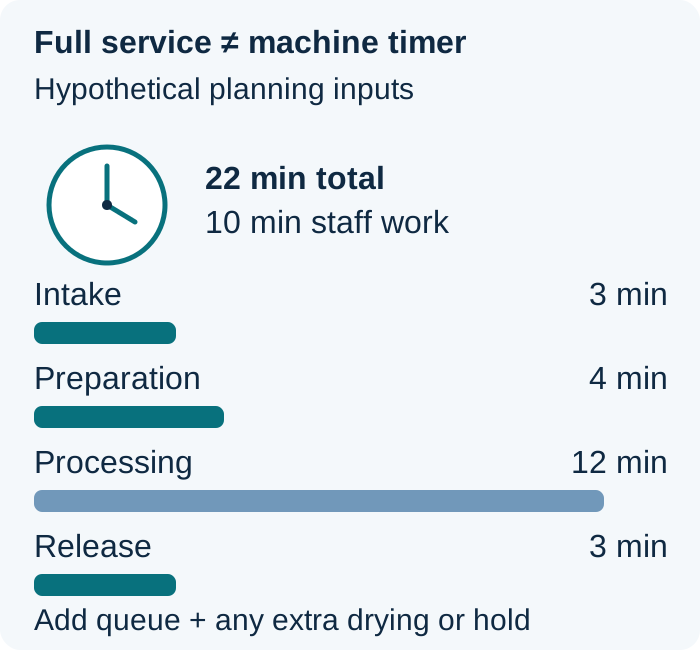
Complete service time = intake + preparation + processing + additional drying or hold + refitting and release + queue time.
For a hypothetical planning example with no queue or extra drying hold, assume 3 minutes intake, 4 minutes preparation, 12 minutes processing and 3 minutes release: 3 + 4 + 12 + 0 + 3 + 0 = 22 minutes. If processing needs no staff attention in this example, hands-on time is 3 + 4 + 3 = 10 minutes. These are assumed worksheet inputs; replace them with observations for each route. They are not machine specifications or drying instructions.
At an assumed 120 accepted services per month, that example requires 120 × 10 ÷ 60 = 20 staff-hours per month. Calculate the manual route with its own observed hands-on minutes. Do not apply a machine’s cycle duration as the labor input for either route. The throughput guide explains how occupied capacity and service exceptions affect scheduling.
Use the same month, accepted service scope and local cost basis for both routes:
Monthly operating cost = N × (a ÷ 60) × L + N × c + E × p + F + R, where N is completed accepted services, a is staff minutes per service, L is loaded labor cost per hour, c is consumables per service, E is monthly energy use, p is the energy tariff, F is fixed monthly operating charges, and R is rework and downtime expense not already included.
| Monthly cost field | What to include consistently |
|---|---|
| Staff time | Intake, handling, refitting, checks, replenishment and cleaning tasks; count each once |
| Consumables | Approved products, replacements and waste, measured under the accepted process |
| Energy and utilities | Measured monthly use or measured service use plus idle consumption |
| Fixed operating charges | Relevant software, connectivity, payment, site or service charges |
| Rework and unavailable time | Repeat handling, held jobs and servicing costs not counted elsewhere |
| Equipment ownership | Show purchase, installation and financing separately; compare both routes over the same ownership period |
A complete ownership comparison adds the equipment and setup costs to operating costs over the selected period. Do not mix a machine purchase with one month of manual labor and call the difference a saving. Use the quotation cost guide for exclusions and the business planning guide for local site costs and operating assumptions.
What to send us for an equipment discussion
Send the intended helmet range, permitted care requirements and service timing to request a configuration-based quotation. Specify which manual tasks the equipment is expected to replace. Keep helmet-maker compatibility decisions separate from the equipment quotation.
| Item | Why we need it | Example format |
|---|---|---|
| Helmet and accessory list | Defines the intended acceptance scope | Model list with component photographs |
| Applicable care instructions | Identifies method restrictions to discuss | Current manual and relevant part pages |
| Incoming condition and proposed outcome | Separates soil removal, drying and any treatment claim | Written service description |
| Complete time record and demand | Shows the required collection window and staff workload | Stage minutes and services per month |
| Site and operating format | Connects process requirements to the self-service proposal | Country, location, staffing and payment needs |
Download the blank process-comparison worksheet (CSV). Its fields mirror the checks above and allow separate manual and automated entries. Enter measured values after a trial, keep unresolved items open, and record the document supporting each permission. The worksheet supports a service decision; it is not a helmet inspection certificate.
Method and sources
This workflow comparison combines component-care guidance with an operator planning worksheet. Sources reviewed on October 19, 2026: SHOEI worldwide How to Maintain Helmet and Safety Instructions 74 (printed July 16, 2024); Arai Americas Care & Cleaning; HJC US Helmet Cleaning; and the US EPA’s ozone-generator air-cleaner guidance. Each OEM document retains its own helmet and component scope. Obtain the current instructions for your model before service.
The process and cost tables are editorial planning tools. The time example uses explicitly assumed inputs; actual settings, drying, compatibility and any treatment claim require the documents and observations for the selected configuration. HCE’s self-service guide supplies the equipment and inquiry context.
Last updated: October 19, 2026.
Related articles
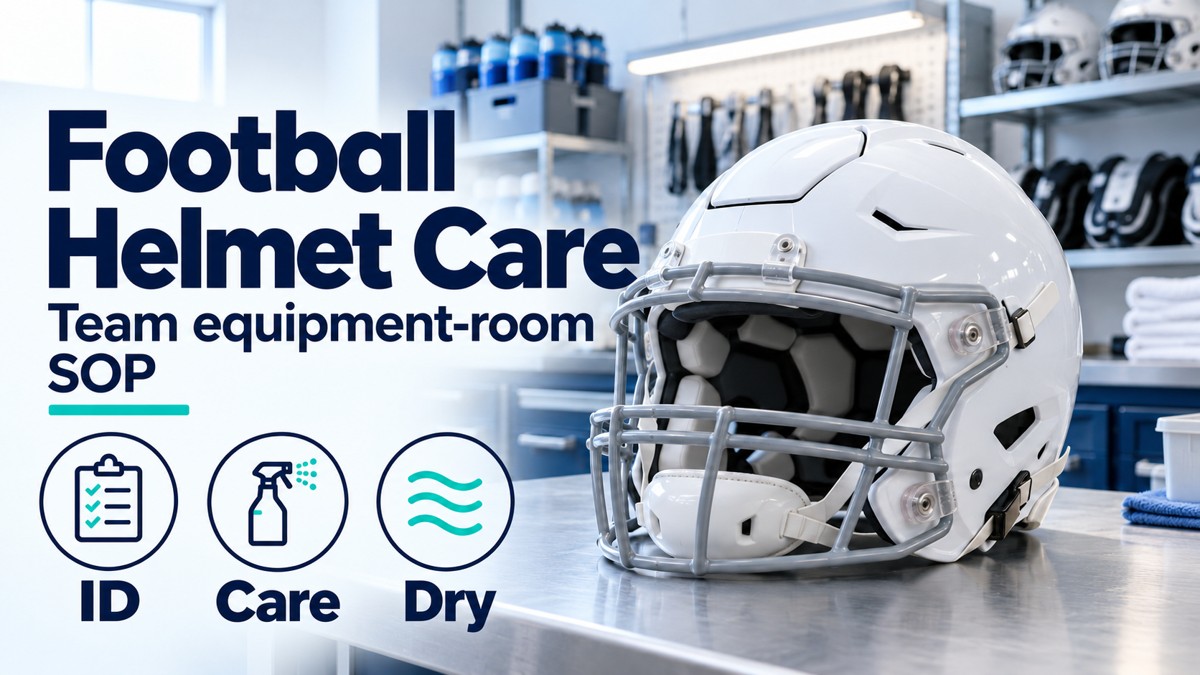
How to Clean a Football Helmet: Team Equipment-Room SOP
Run a football helmet cleaning and sanitizing SOP with component checks, disinfectant label decisions, batch planning and a downloadable team care log.
Read article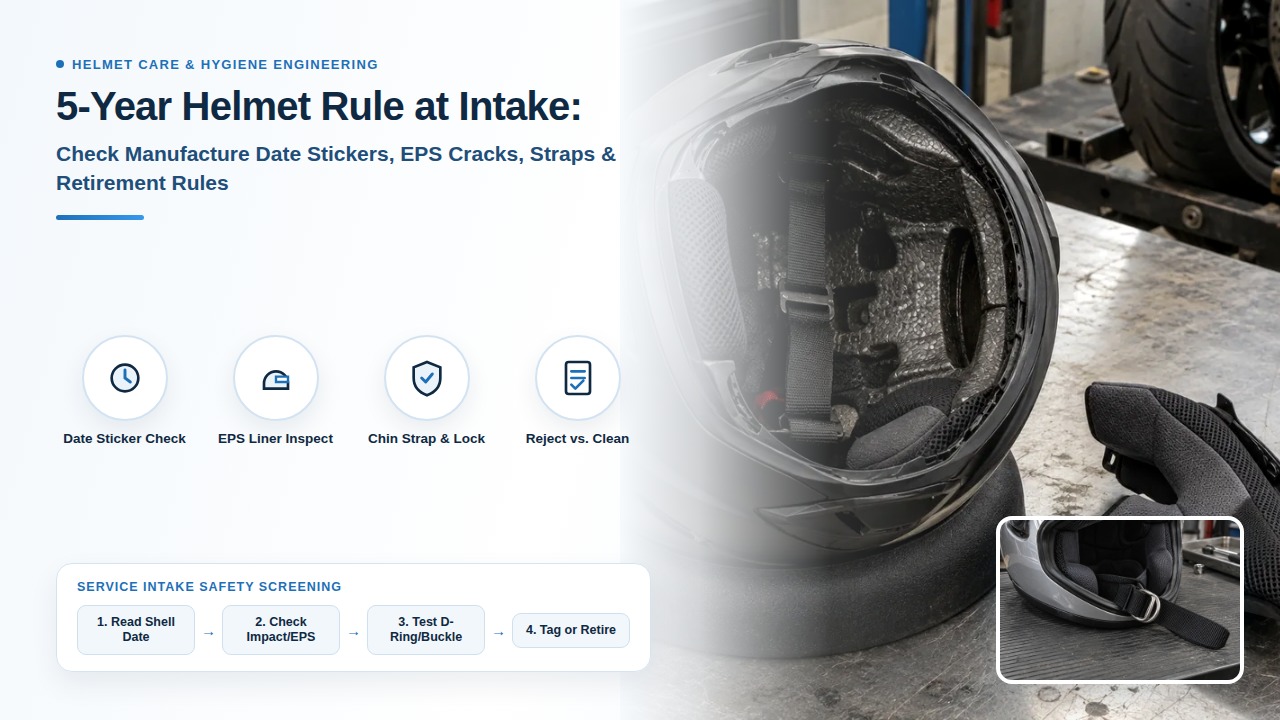
The Five-Year Helmet Rule: Check Dates and Retirement Instructions Before Cleaning
Separate manufacture, purchase, first-use, warranty and replacement dates before accepting an older helmet for cleaning, using a date-source intake register.
Read article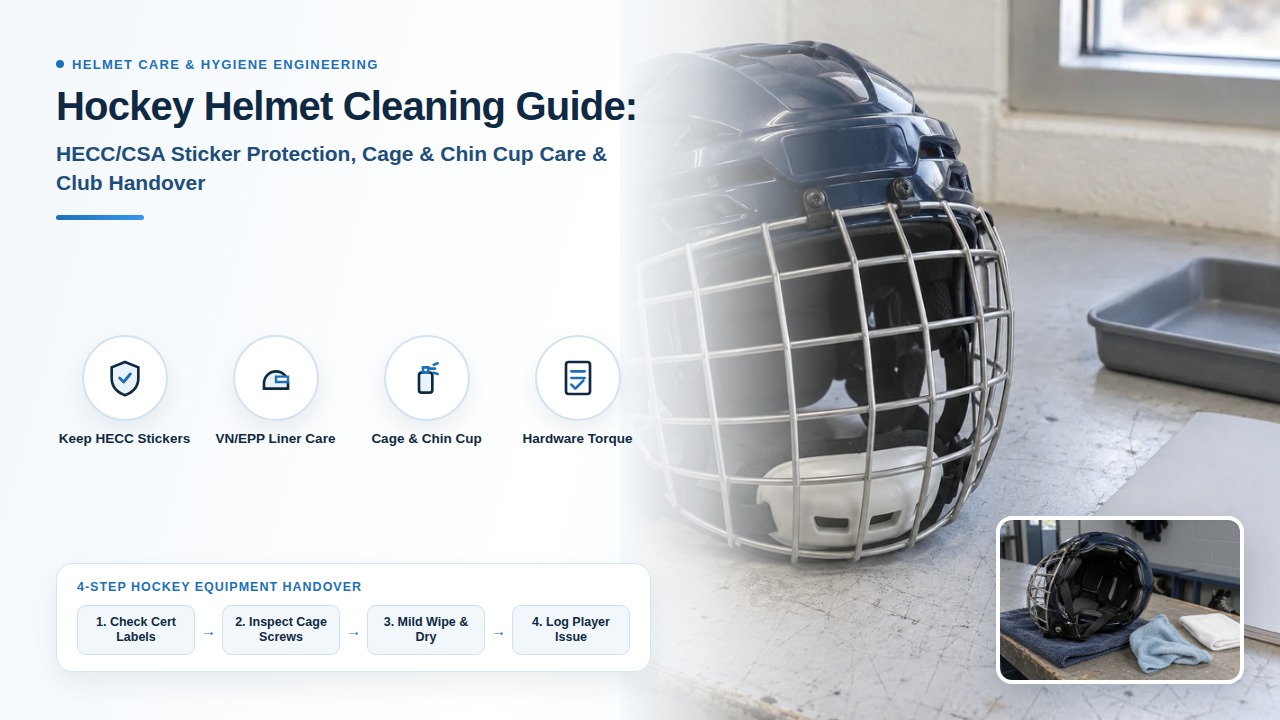
How to Clean a Hockey Helmet: Care and Club Handover
Clean a hockey helmet using its own manual, check the cage separately, and record drying, damage and label observations with a club handover checklist.
Read article