Helmet Visor Cleaning: Chemical and Insert Checks
Check the visor, coating and anti-fog insert separately before choosing a cleaner, and record what each instruction permits.
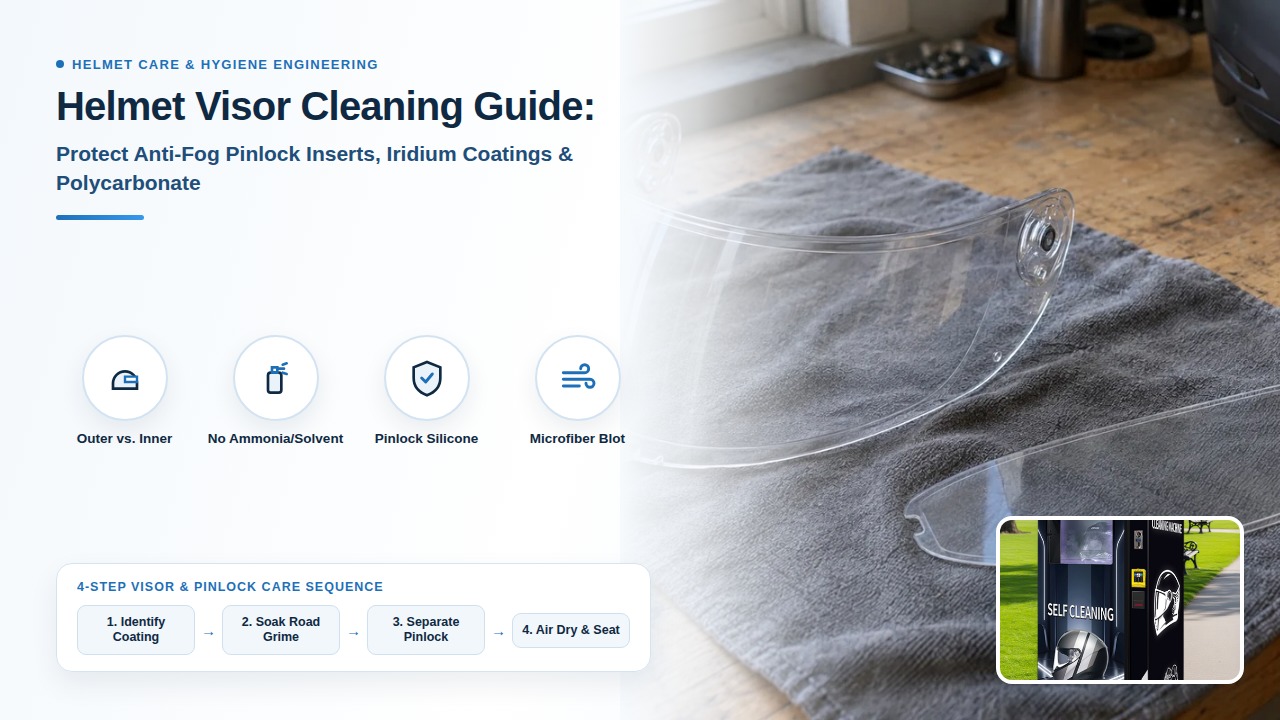
Using the wrong cleaner can damage a visor or insert instead of leaving a clearer view. Do not use WD-40 as a default helmet visor cleaner; first match the exact proposed product and method to the instructions for the visor, its coating and any anti-fog insert.
Use a product on an optical part only when that part’s own instructions permit it. For service intake, identify the outer shield and the insert separately, check the permitted materials, record visible condition before and after, and follow the documented drying and refitting steps. This guide does not approve a general-purpose chemical, restore a scratched surface or authorize visor treatment inside a helmet cleaning cabinet. It gives you the checks and records to make that decision traceable.
| Input or item | Typical value or source | Why it matters |
|---|---|---|
| WD-40, glass cleaner or alcohol proposed | Use only if the exact component instructions permit it | A product name is not a method; public examples exclude glass cleaner, ammonia and alcohol |
| Visor with an anti-fog insert | Separate identity and care document for each part | One insert’s method can be stricter than the visor’s |
| Scratch, haze or crack | Before photograph, owner report and replacement guidance | Cleaning does not restore optical performance |
| Drying and refitting | The identified components’ instructions | There is no universal drying time or setting |
| Cabinet processing proposed | Component permission plus the equipment’s process scope | Hand-cleaning guidance is not cabinet approval |
Identify the visor and insert separately
Record the helmet, outer visor and insert identities before selecting a method. A removable anti-fog insert is a separate optical component attached to the inside of some visors, not another name for the shield. The coating, insert and attachment system may each have instructions that change the accepted service route, so each needs its own document.
| Input or item | Value or source to obtain | Why it matters |
|---|---|---|
| Outer visor | Part identification and care instructions | Establishes the shield’s permitted method |
| Coating or surface treatment | Product description and applicable care restrictions | Prevents assuming identical care for every surface |
| Anti-fog insert | Insert identification and its own instructions | Establishes cleaning, drying and assembly requirements |
| Attachment | Helmet and accessory installation guidance | Prevents using the wrong removal or adjustment method |
| Proposed materials | Exact product and intended use | Gives the compatibility decision a specific object |
| Incoming condition | Photographs and customer report | Separates pre-existing concerns from the service record |
Record whether the assembly has an insert rather than guessing from appearance. One insert supplier uses its own product code to distinguish lenses shaped for particular visors, which is why a similar outline does not establish that two parts are interchangeable. If the component cannot be identified, ask the owner for the supplied documentation or refer the question to the component supplier before removal or processing.
The helmet intake SOP covers the complete service workflow; use this optical-parts record at its compatibility stage. The self-service equipment guide asks buyers to confirm the accepted helmet and accessory list, exclusions and exception handling. A cabinet photograph does not establish that an attached visor or insert is accepted.
Takeaway: Identify every optical component before choosing materials or removing parts.
Check the proposed cleaner against each instruction
Start from the materials and handling method that each component’s instructions permit. Do not select a cleaner because it is already used on the shell, the fabric or another visor. If the proposed product is outside the documented method, hold the decision for written clarification. A small-area trial is not proof of compatibility, and a product’s popularity is not permission.
The public examples show how narrowly these permissions are written. One helmet manufacturer’s guidance for shields and plastic parts permits neutral detergent mixed with water. It warns against petroleum agents, acid or alkali household detergents and glass cleaner, and links cracking of plastic parts to organic cleaning agents. A separate anti-fog insert supplier specifies rinsing the lens and visor with only mineral water and using a clean, wet microfiber cloth for remaining stains. Its maintenance manual excludes abrasive cleaning products and liquids containing ammonia or alcohol.
Those two documents do not agree on one method, and neither authorizes a product for every other visor or insert. That is the practical answer to the WD-40 question: the name alone does not specify a formulation or an approved optical-care method. This guide makes no formulation analysis or performance claim about that product and does not replace a component supplier’s compatibility decision.
| Document or record | What it answers | What it does not establish |
|---|---|---|
| Visor care instructions | Permitted method and restrictions for that shield | Permission for a different coating or insert |
| Insert care instructions | Cleaning, handling and drying for that insert | A whole-helmet process |
| Cleaner product information | Identity and stated intended use | Approval by the component supplier |
| Safety information | Handling and exposure information for the product | Optical compatibility by itself |
| Equipment process description | Materials and stages of the proposed machine process | Permission from the helmet or optical-part manufacturer |
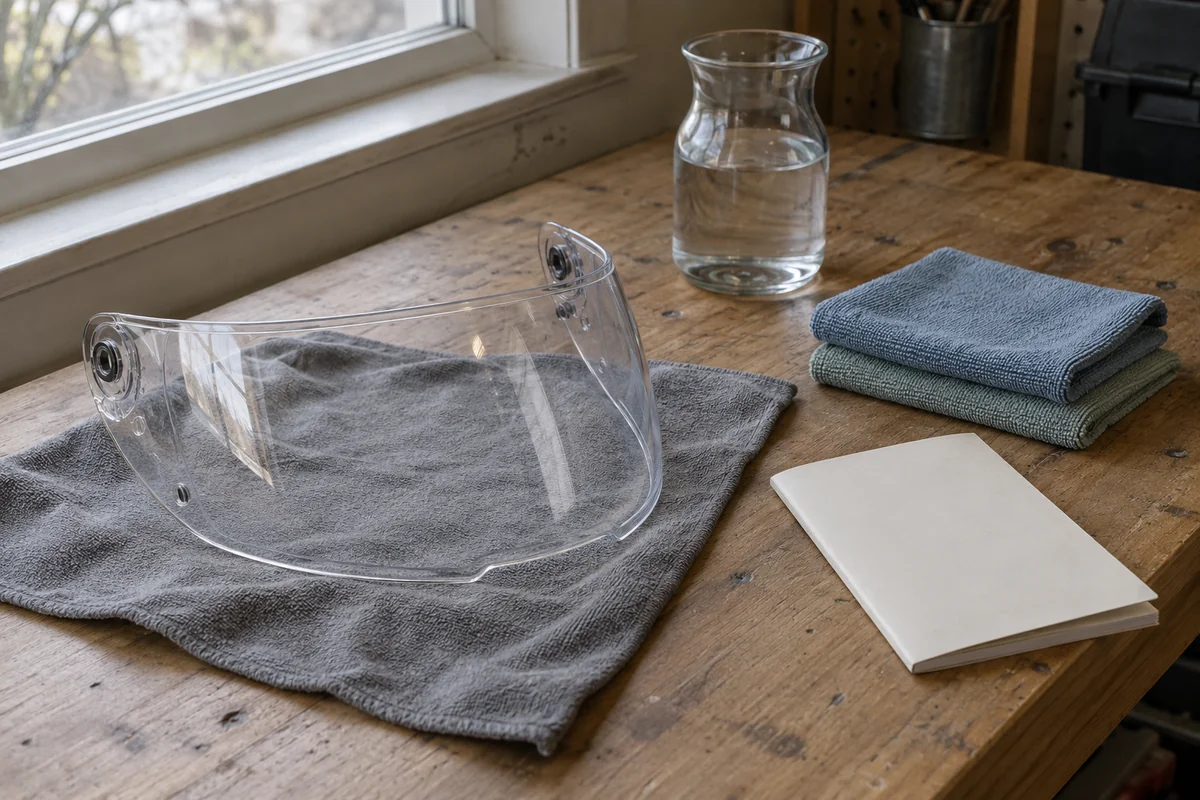
For the equipment side of this discussion, the commercial selection guide helps frame a request for process evidence. Keep the distinction between cleaning and disinfection separate from an optical-material acceptance decision.
Common mistake: Treating “suitable for helmets” on a cleaner label as permission for every optical surface. Check the shield, coating and insert instructions independently.
Takeaway: Product identity and safety information support review; component permission determines the accepted method.
Keep cleaning and damage decisions separate
Record visible marks, scratches, haze, cracks, residue and attachment concerns before cleaning, then record the observations after the permitted process. A change in appearance is not proof that optical or protective performance has been restored. Keep any replacement or manufacturer-review decision distinct from the cleaning result, and tell the customer which outcome applies.
The helmet care source warns that a scratched shield can interfere with vision in rain or reflected light and directs replacement. Apply the guidance for the actual shield when a concern is found. Do not polish, abrade or chemically treat a scratch as part of this intake checklist, and do not promise that cleaning will make an affected visor suitable for use.
| Observation | Suggested record | Suggested routing question |
|---|---|---|
| Surface deposit or residue | Location and incoming appearance | Does the applicable method cover removal? |
| Scratch, haze or crack | Visible area and owner report | What do the component instructions require? |
| Unknown prior chemical use | Product or method if the owner knows it | Is supplier clarification needed before further work? |
| Loose insert or suspect seal contact | Incoming attachment observation | Which assembly instructions apply? |
| Problem remaining after cleaning | What is still visible, without a repair claim | Hold or refer under the applicable guidance |
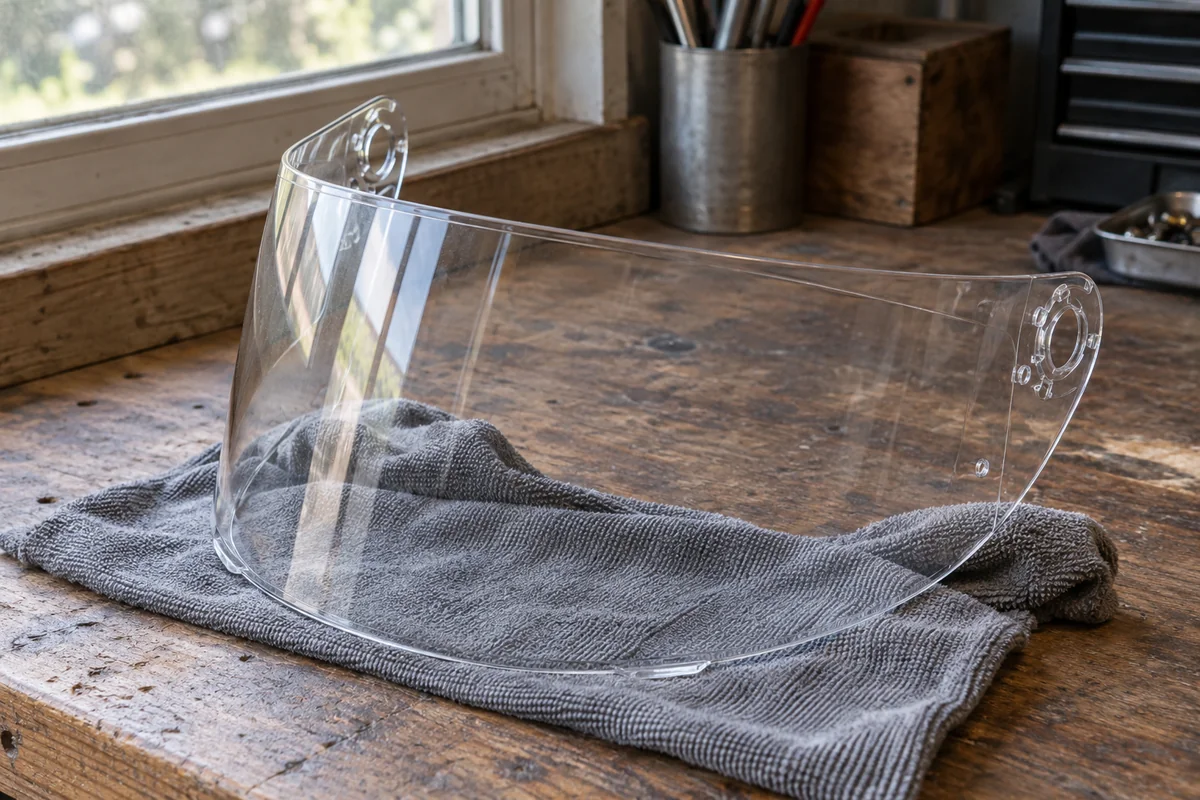
Where traceability matters, photograph the same identifiable component under similar viewing conditions before and after. An ordinary photograph is useful for handover but cannot settle every transparency, coating or safety question. Record the observations plainly rather than marking an unperformed test as passed.
The equipment functions guide separates processing functions from staff checks. Keep that distinction in the service record: note the status or completion information actually available in the confirmed configuration, alongside the operator’s component observations. Do not assume automatic process logs or exports are included.
Takeaway: A cleaner surface and a resolved damage concern are separate outcomes.
Check drying and reassembly requirements
Follow the identified visor and insert instructions for removal, drying and refitting. Do not borrow a fixed drying duration, heat setting or attachment adjustment from another assembly. Keep the components identifiable while they are separated, and record any unresolved attachment or seal issue before making the handover decision for that helmet.
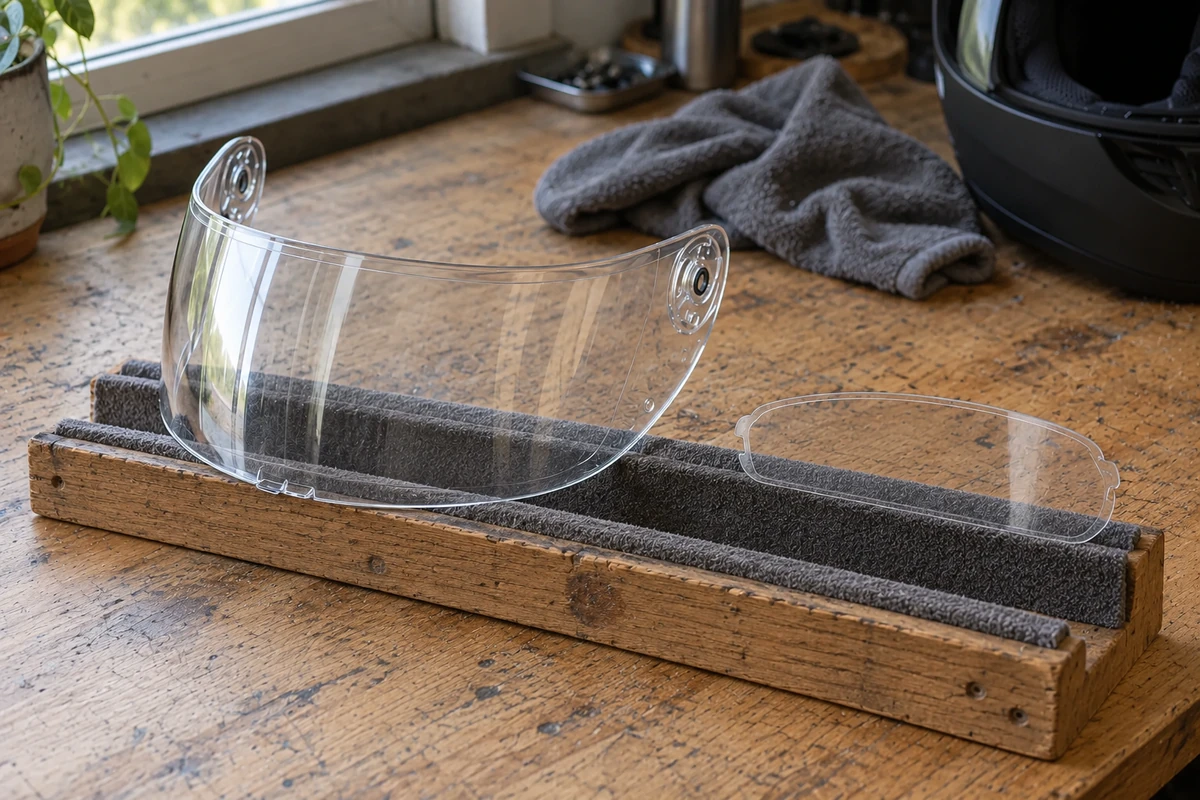
The insert supplier’s instructions describe drying the lens and visor naturally in an upright position before reassembly, then checking in natural light that the insert’s seal makes full contact with the visor. That sequence belongs to the specified insert system. It shows why an insert instruction must be read independently; it is not a universal fitting procedure for every anti-fog coating or accessory.
| Handover check | Record to complete | If the check remains unresolved |
|---|---|---|
| Part identity | Same shield and insert as intake | Resolve the component mismatch |
| Drying | Applicable instruction and observed completion | Hold reassembly for the required condition |
| Attachment | Documented fitting method and observation | Refer the fastening or installation issue |
| Insert seal, where applicable | Check required by the identified system | Use that system’s guidance; do not improvise adjustment |
| Final visible condition | Remaining marks, damage or other concern | Record and refer rather than claiming repair |
Build these observations into the SOP release record. If equipment behavior interrupted the service, use the machine maintenance checklist for the equipment fault rather than changing the optical-part instructions to accommodate it.
Common mistake: Refitting an insert as soon as the outside visor looks dry. Check the conditions for both identified components and their attachment before handover.
Takeaway: Drying and assembly completion come from the applicable component instructions.
When this guide does not apply
This guide supports optical-parts intake and handover only. It does not prescribe a chemical recipe, recommend a cleaner brand or certify optical performance, and it does not cover impact repair or a disinfection treatment. A coated visor, a removable insert and a fixed anti-fog surface are not interchangeable service categories. Pause the affected decision when one of these conditions appears.
| Condition outside the accepted scope | Suggested pause and referral |
|---|---|
| Unknown shield, coating or insert | Hold material selection; obtain identity and applicable component document |
| Proposed method outside the instructions | Hold cleaning; ask the component supplier about that exact material and method |
| Visible damage or unknown chemical exposure | Hold the release decision; retain observations for the manufacturer route |
| Attachment or seal requirement unclear | Hold refitting; obtain the identified system’s installation guidance |
| Proposed cabinet route without compatibility evidence | Hold cabinet processing; obtain both component permission and equipment-process scope |
Fabric comfort pads follow their own instructions; use the padding intake guide for that decision. Do not infer cabinet compatibility from a hand-cleaning instruction or from a visor pictured on equipment. No universal solvent, detergent, concentration, temperature or drying time is supplied here.
Use the throughput guide to account for identification, separate handling and hold time in capacity planning. A nominal machine cycle does not describe the time needed to resolve an optical-part exception.
Takeaway: Stop at the documented boundary rather than adapting an unrelated cleaning method.
Complete the optical-parts handover
Close the record with component identity, the permitted method used, incoming and final observations, drying and assembly checks, and unresolved issues. Mark a held or referred item accordingly. The purpose is a traceable service decision, without presenting a routine cleaning record as a product certification or damage repair. Use one record per received assembly.
| Optical-parts record | Entry to complete |
|---|---|
| Identity | Job or helmet identifier; shield, coating and insert identifiers |
| Method basis | Applicable document version and component scope; permitted materials and restrictions |
| Process record | Proposed and actually used material and method; responsible operator |
| Condition | Matched incoming and final observations or photographs; remaining concern |
| Drying and assembly | Applicable checks and observations; any unresolved attachment or seal issue |
| Status | Completed within the accepted scope, held or referred; reason |
| Next action | Outstanding question; supporting component documents; responsible recipient |
These are suggested operator fields, not a manufacturer form or an industry standard. Direct material permission, replacement and component-assembly questions to the identified component supplier. Neither route is a promise that HCE provides optical-part repair or compatibility certification.
Send equipment-process questions to the equipment provider. If you are specifying a self-service helmet cleaning machine, list the helmet and accessory range you intend to accept and how optical-part exceptions will be handled, then use the enquiry form below. The business planning guide assigns operator responsibilities, including who handles a hold where payment or collection happens without staff at the machine.
Takeaway: Hand over a clear status and outstanding action with the identified optical parts.
Method and sources
The limited care examples come from one helmet manufacturer’s public guidance for shields and plastic parts and one anti-fog insert supplier’s current support page and maintenance manual, read in October 2026. Each retains its own component and product scope; obtain the current documents for your own parts before service. The tables are suggested operator records. No cleaning trial or optical test is reported here. HCE’s self-service configuration guide supplies equipment context, not chemical approval or permission to process optical accessories in a cabinet.
Last updated: October 2026.
Frequently Asked Questions
Can I use WD-40 to clean my helmet visor?
Can you clean a helmet visor with Windex?
Can you clean a helmet visor with alcohol?
Can you clean a helmet visor with glass cleaner?
How do you clean a helmet visor?
Can I make my own helmet cleaner?
Can I clean my helmet with sanitizer?
Discuss your requirements
Contact us about the equipment question in this guide.
We reply within 24 hours.
What to send us
| Item | Why we need it | Example format |
|---|---|---|
| Application | Understand the intended use | Site type; operating arrangement |
| Question to resolve | Focus the configuration discussion | Question; relevant guide section |
| Configuration and quantity | Identify the proposed equipment scope | Model; number of units |
We reply within 24 hours.
Related articles
Helmet Disinfectant Spray: Check the Label and the Helmet Document
Hold a disinfectant spray until its container label and the exact helmet or component document both allow it on that surface for that use. Record the decision.
Read article
Is Helmet Padding Machine Washable? An Intake Guide for Cleaning Operators
Identify removable comfort padding, fixed interiors and impact liners before accepting a helmet. Check model-specific washing, drying and refitting guidance.
Read article
How to Clean a Football Helmet: Team Equipment-Room SOP
Run a football helmet cleaning and sanitizing SOP with component checks, disinfectant label decisions, batch planning and a downloadable team care log.
Read article